
The Three Silhouettes Every Furniture Brand Is Chasing Right Now
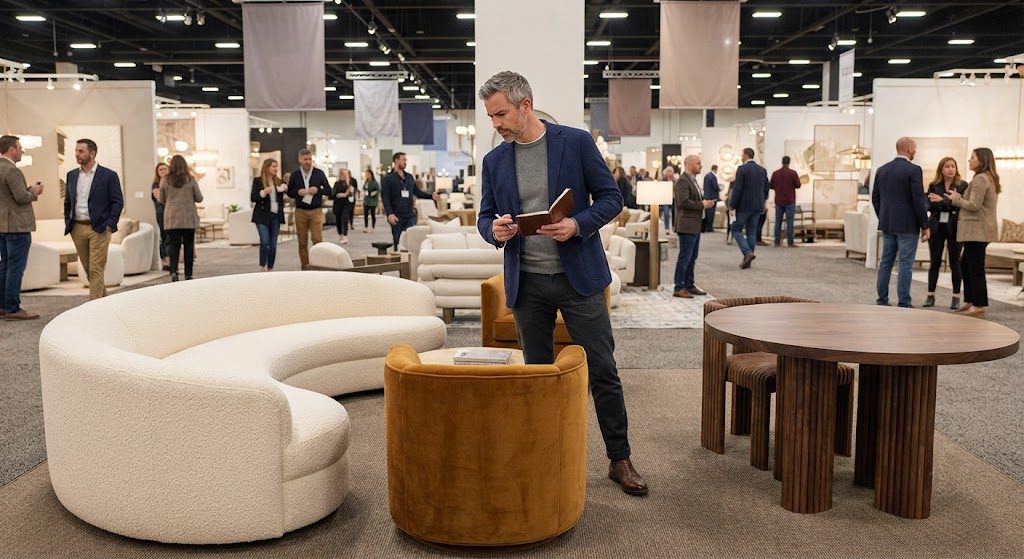
Trade shows have a rhythm. In the first few hours, everything looks new. By day two, you start seeing the same shapes in different fabrics, different finishes, different price points. By day three, the pattern is impossible to ignore. This market, three silhouettes appeared in more showrooms than I could count. They're not new ideas—the barrel-back chair has been around for a century, and curved sofas had their last big moment in the 1970s. But they've resurfaced with enough momentum that every brand wants a version. The difference between the good ones and the rushed ones tells you everything about who's designing with intention and who's chasing a trend.
The Three Silhouettes
The Barrel-Back Chair
The barrel-back is a chair with a rounded, wraparound backrest that curves around the sitter like a half cylinder. When it's right, it's one of the most inviting seats in a room—it encloses without confining, and it reads as both traditional and modern depending on the leg and fabric choice. When it's wrong, it's a rigid shell that feels like sitting in a bus shelter.
Three manufacturers got it right at this market. A North Carolina maker showed a version in solid white oak with a caned back panel, priced at $1,200 retail. The backrest curve was generous—a 22-inch radius that accommodated a broad-shouldered adult without pinching. The armrests landed at exactly 25 inches, the height I flagged in my sofa guide as the sweet spot for elbow support. The seat was a loose cushion over a webbed deck, which meant it could be reupholstered in ten years without rebuilding the frame. A Danish brand showed a slimmer version in oiled walnut with a wool seat pad, smaller in scale and better suited to a bedroom corner or a reading nook. A direct-to-consumer company out of the Midwest had the value pick: ash frame, performance velvet, $490, with corner blocks that were both glued and screwed. That chair will sell in volume and hold up.
The versions that failed looked the same from across the aisle but fell apart on inspection. One brand used a stapled plywood shell with a thin foam wrap, no webbing under the cushion, and legs attached with a single bolt each. The backrest creaked under 200 pounds. That's a chair built for a staged home, not a lived-in one.
The Curved Sofa
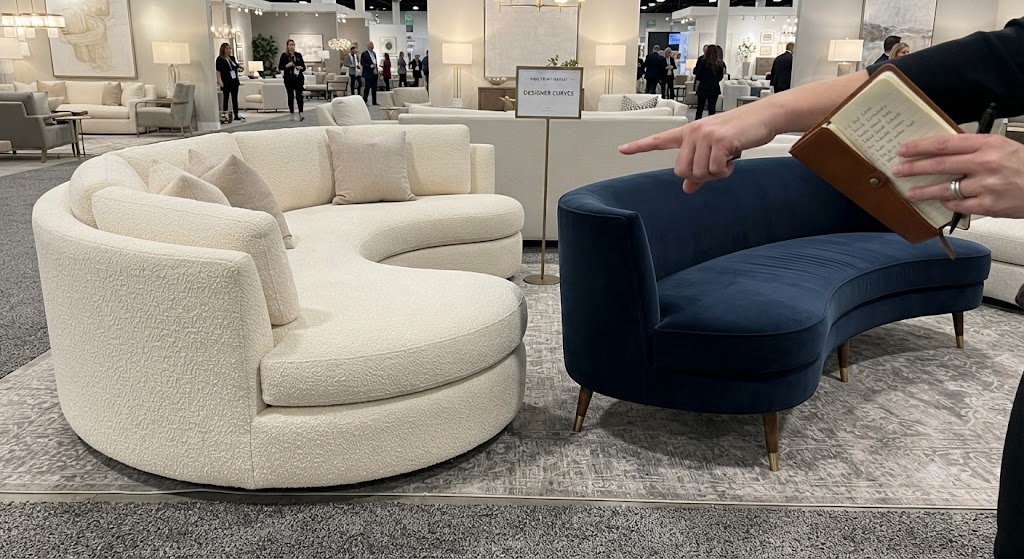
The curved sofa is the highest-risk, highest-reward piece in furniture right now. Done well, it pulls a room together in a way a straight sofa never can—it creates a focal point, invites conversation, and softens a rectangular room. Done poorly, it's a $4,000 mistake that seats fewer people than a standard sofa and fits against no wall.
The geometry is unforgiving. A curved sofa needs a radius gentle enough that two adults can sit side by side without their shoulders touching, but tight enough that the curve reads as intentional, not accidental. The best version I saw came from a European manufacturer showing a 96-inch curved sofa with a 120-inch radius. The seat depth was a full 25 inches, and the back was fully upholstered on both sides—meaning it could float in the center of a room, not just sit against a wall. Price: $5,200 retail. Worth it for the right room.
The worst version was a 72-inch curved sofa with a 60-inch radius—practically a semicircle. It sat two people uncomfortably and left a third person staring at the back of someone's head. The manufacturer had clearly started with a standard sofa frame and bent it without rethinking the seating geometry. Curved sofas can't be standard sofas with a bend. They need their own frame engineering, their own spring layout, their own cushion pattern. The brands that understand this are charging accordingly. The brands that don't are selling a photograph, not a piece of furniture.
The Fluted-Leg Table
Fluting—vertical grooves cut into wood—has been applied to everything this market, but it works best on table legs. The grooves catch light and shadow, adding texture to what would otherwise be a smooth turned leg. It's a detail borrowed from Art Deco and mid-century design, and it's back because it photographs beautifully and requires no additional materials, just additional machining time.
A Vermont-based manufacturer showed a walnut dining table with hand-cut fluting on each leg, spaced evenly and sanded smooth inside each groove. The table was $3,800 and looked like it. The fluting was structural—the legs were solid 3-inch squares before the grooves were cut—not a veneer wrap over MDF. That's the difference between a piece that lasts and one that peels.
Several import brands at lower price points showed fluted-leg tables where the fluting was a molded plastic sleeve slipped over a standard leg. From five feet away, it reads the same. Up close, the seams are visible, and the plastic will chip at the edges within a year. If a fluted-leg table is under $600, assume the fluting is applied, not cut. That's not necessarily a dealbreaker if you're furnishing a rental, but know what you're buying.
What This Tells Me About the Market
When three silhouettes appear in thirty showrooms, the industry is consolidating around a look. That's not a bad thing—consolidation means the supply chain matures, prices come down, and the best versions rise to the top. But it also means a lot of rushed product hits the floor. The barrel-back chair, the curved sofa, and the fluted-leg table are all worth owning if you buy the version that was designed from the inside out, not the one that was sketched to fill a showroom slot. Ask about the frame. Ask about the joinery. Ask whether the curve was engineered or just applied. The answers will tell you which version you're looking at.
Keep Reading

Furniture Outlet Shopping: How to Find Quality Pieces at a Real Value
Furniture outlet shopping guide: learn how to judge frames, upholstery, delivery...

Grey Accent Chair Ideas: How to Choose One That Looks Expensive
Grey accent chair ideas for a polished, livable room. Learn which fabrics, frame...

Panel Bed Buying Guide: What Actually Matters Before You Buy
Panel bed buying guide: learn how to compare wood, upholstery, joinery, storage,...
Owner Letters
0 lettersNo letters yet — be the first to write one.