
Armchair Armchair: How to Choose a Comfortable, Well-Made Chair

The search for an armchair armchair can become oddly frustrating. You find hundreds of similar-looking chairs, but the useful details are buried: seat depth, frame material, cushion fill, fabric durability, and whether the proportions will actually work in your room. After years of buying living-room furniture, I look past the staged photograph first. A good chair should support your back, hold its shape, and make sense for the price.
Start with the way you will use it
Before comparing colors, decide what job the chair needs to perform. A reading chair needs a supportive back and enough depth to settle in without forcing your knees upward. A television chair should have a slightly more relaxed posture. A chair beside a fireplace or in a conversation area can be firmer and more upright because people will sit in it for shorter periods.
Measure the user as carefully as the room. Someone tall may need a seat depth around 21 to 23 inches, while a smaller adult may be more comfortable closer to 19 or 20 inches. Seat height matters too. A low, lounge-style chair can look excellent but become difficult to stand from, especially for older adults. Most everyday chairs land around 17 to 19 inches from floor to seat, though cushion compression changes the actual sitting height.
When I inspect an armchair armchair, I also check the arm width. Broad padded arms feel generous, but they reduce the usable seat and can make a compact chair surprisingly cramped. Slim arms often deliver more sitting space without increasing the overall footprint.
Read the frame before admiring the fabric
A chair does not need to cost $2,000 to be sound, but it does need a frame that is properly joined. Kiln-dried hardwood, plywood with substantial layers, and reinforced corner blocks are all reasonable construction choices. The warning signs are vague descriptions such as “wood frame” with no information about the material or joinery.
Lift one front corner slightly. The opposite front leg should respond rather than wobble independently. Run your hand along the underside if the chair is exposed. You are looking for a clean, tight platform rather than loose fabric, exposed staples, or a thin board flexing under pressure. An armchair armchair with a strong frame can be reupholstered later; one with a weak frame is rarely worth rescuing.
The legs deserve attention as well. Solid wood legs usually feel more convincing than lightweight hollow metal or plastic, but appearance is not everything. A well-attached steel leg can be perfectly practical. Check whether the attachment plate is secure and whether the leg sits flat. On a $400 to $700 chair, small construction compromises are normal. They should not include visible movement or uneven contact with the floor.
Cushion materials decide daily comfort
The seat is where inexpensive chairs reveal themselves. Polyurethane foam is common and can perform well when it has adequate density and is wrapped with fiber or batting. A very soft seat is not automatically better. It often feels impressive in a showroom, then bottoms out against the deck after months of regular use.
For an armchair armchair used every day, I prefer a seat that feels supportive during the first ten seconds and still comfortable after fifteen minutes. Press near the front edge and then the center. The cushion should recover without a long delay. If it stays visibly compressed, expect the shape to change quickly.
Loose seat cushions are easier to rotate and replace, while attached cushions look tidier and resist shifting. Removable covers are helpful, particularly in homes with children, pets, or frequent snacks, but do not assume every removable cover is machine washable. Some require professional cleaning, and textured fabrics can be difficult to match if a panel is damaged.
Back cushions follow the same logic. Fiber gives a soft, relaxed feel but needs regular plumping. Foam provides more consistent support but can feel firmer. A combination of foam core and fiber wrap is often the sensible middle ground for a chair priced between $600 and $1,200.
Choose upholstery for the room you actually have
Performance fabric is useful, but the label alone is not a guarantee. Ask what cleaning code applies and whether the cover is treated, woven, or coated. A tightly woven polyester blend can handle daily life better than a delicate natural fiber. Leather is durable in many settings, though it scratches, changes color, and becomes more supple with use rather than staying pristine.
If sunlight reaches the chair for several hours, avoid making a dark saturated fabric your first choice unless you accept gradual fading. For a high-traffic family room, medium tones and subtle patterns conceal marks better than solid ivory. Boucle and heavily nubby fabrics are attractive, but their loops can catch on pet claws or sharp hardware. That is not a reason to avoid them; it is a reason to use them in a lower-risk room.
An armchair armchair should also relate to the sofa rather than match it perfectly. A chair in a contrasting texture can make a room feel collected. Keep one element consistent, such as the wood tone, leg shape, or general color temperature. Matching every upholstery panel often produces a showroom set instead of a room with personality.
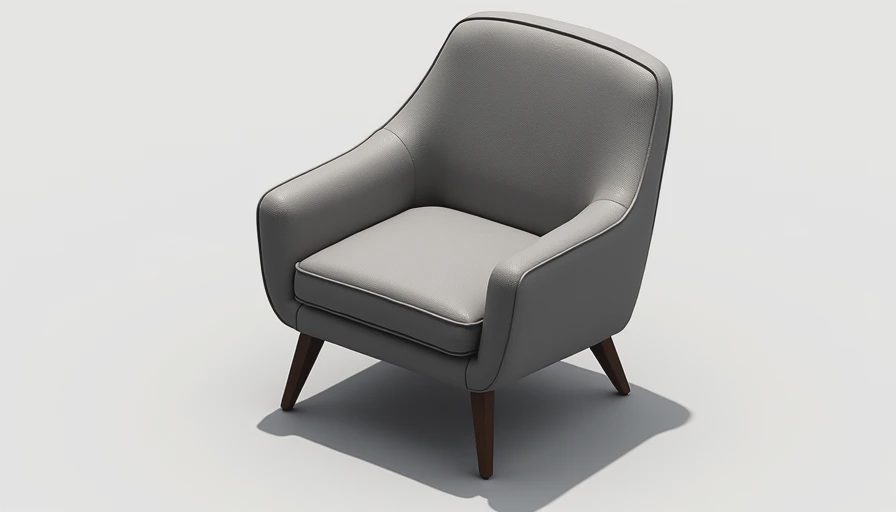
Get the scale right before delivery
Tape the chair’s footprint on the floor using painter’s tape. Include the arm width and the maximum reclined or lounging position if the design allows it. A chair that looks compact online can occupy 34 inches of width and 36 inches of depth once you account for its arms and back. Leave enough passage space for people to walk around it without turning sideways.
Check the delivery path too. Measure the front door, hallway turns, elevator, and stair landing. A chair with a fixed back may not fit through a narrow entry even when the listed width seems acceptable. Many furniture headaches happen before the chair reaches the living room.
For an armchair armchair in a small apartment, look for exposed legs and a visually open base. The floor showing beneath the chair makes it feel less heavy. In a larger room, a deeper chair with substantial arms can anchor an empty corner, especially beside a floor lamp and small drink table.
What should you spend?
The under-$400 category can produce a useful occasional chair, but inspect it closely and expect simpler foam, lighter frames, or limited fabric choices. Around $500 to $900, the value improves noticeably. This is where I often find the practical winner: a chair with a stable frame, respectable cushion construction, and upholstery that does not pretend to be luxury.
At $1,000 to $1,500, you should see better tailoring, stronger suspension, more fabric options, and improved comfort. That price is not automatically justified, though. Compare the interior specifications and warranty rather than paying for a familiar label. A mid-priced armchair armchair with replaceable cushions can be a better long-term purchase than a fashionable chair with a sealed, thin seat.
Before ordering, confirm the return policy, delivery damage procedure, cleaning instructions, and whether replacement covers or cushions are available. Sit in a comparable floor model if you can, but remember that a showroom sample may have softened from heavy use. The best choice is the one that fits your body, your room, and your maintenance tolerance. If those three agree, the chair will earn its space instead of merely filling it.
Keep Reading

Minimalist furniture: How to Buy Pieces That Look Good and Last
Minimalist furniture for real homes: learn how to judge materials, joinery, comf...

How to Choose a Wood Desk That Holds Up to Real Life
Find a wood desk that earns its space with solid construction, useful storage, a...

How to Choose a Sofa for Living Room Comfort and Value
Find the right sofa for living room comfort, scale, fabric, and value. Learn wha...
Owner Letters
0 lettersNo letters yet — be the first to write one.