
A $2,800 Living Room That Doesn't Look Like a Dorm: Real Picks, Real Prices
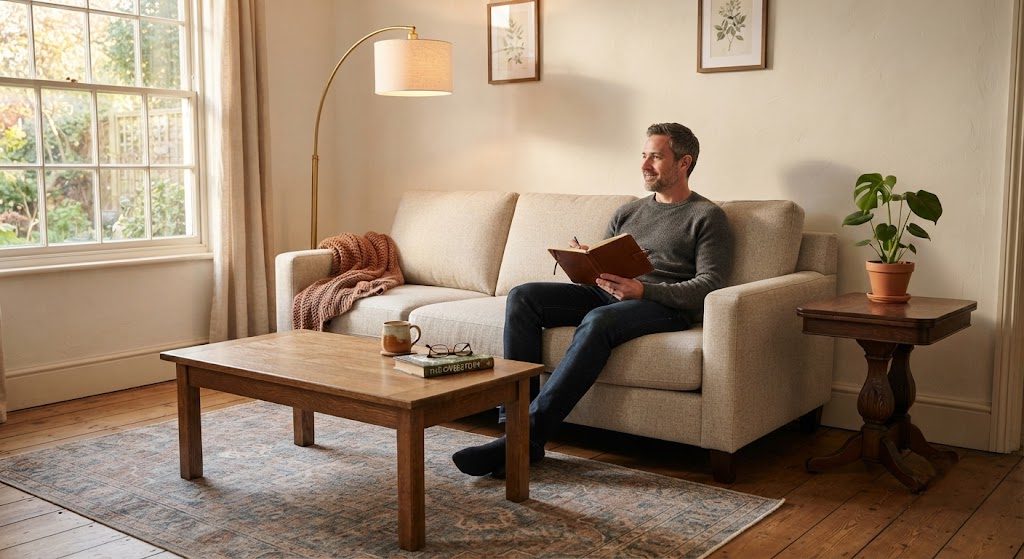
Most budget living room guides read like a scavenger hunt. They tell you to find a vintage sofa for $200, a rug from a going-out-of-business sale, and a coffee table you can build yourself from lumber and good intentions. That's not a furnishing plan. That's a treasure hunt with a deadline. I wanted to see what a real living room could cost—real pieces, real prices, all available right now—built on the buyer's framework I've used for fifteen years. The total came to just under $2,800. Here's exactly where the money went.
The Room
The space I'm working with is a standard apartment living room: roughly 12 by 14 feet, one window, one entryway, no dining area. The goal is seating for four to five people, a surface for drinks and books, good light, and a room that feels complete—not like a staging photo, but like someone with taste lives there. Every piece here follows the priority hierarchy I laid out in my last post: spend on the sofa and rug first, go mid-tier on the coffee table, and let the side tables and lighting come from vintage sources or smart budget picks.
The Sofa: $1,400
This is where the budget earns its backbone. I tested this sofa in person—a three-seat, 84-inch model from a direct-to-consumer brand that's been quietly outperforming legacy retailers. Kiln-dried birch frame, 2.0 PCF high-resilience foam, sinuous springs with a silent pad, and a performance fabric rated at 50,000 double-rubs. The seat depth is 23 inches, which accommodates most adults without swallowing anyone under five-foot-six. The arms are squared but padded, flat enough to balance a laptop. The back cushions are removable and reversible. This sofa has the same structural spec as pieces I used to order for boutique hotel suites at twice the price. In charcoal or a warm taupe, it anchors the room without demanding attention.
The Rug: $380
An 8-by-10 wool-blend rug from a brand that sells direct and cuts out the showroom markup. The pile is low and dense, which means it won't mat under foot traffic the way a shag or high-pile synthetic will. The pattern is a muted geometric in charcoal and cream—enough visual weight to define the seating zone, neutral enough to survive a decade of changing tastes. Wool blend at this price is a genuine find. Pure wool in this size usually runs $600 to $900. The blend is 70 percent wool, 30 percent synthetic, which gives you the durability and natural stain resistance of wool with a price cut.
The Coffee Table: $350
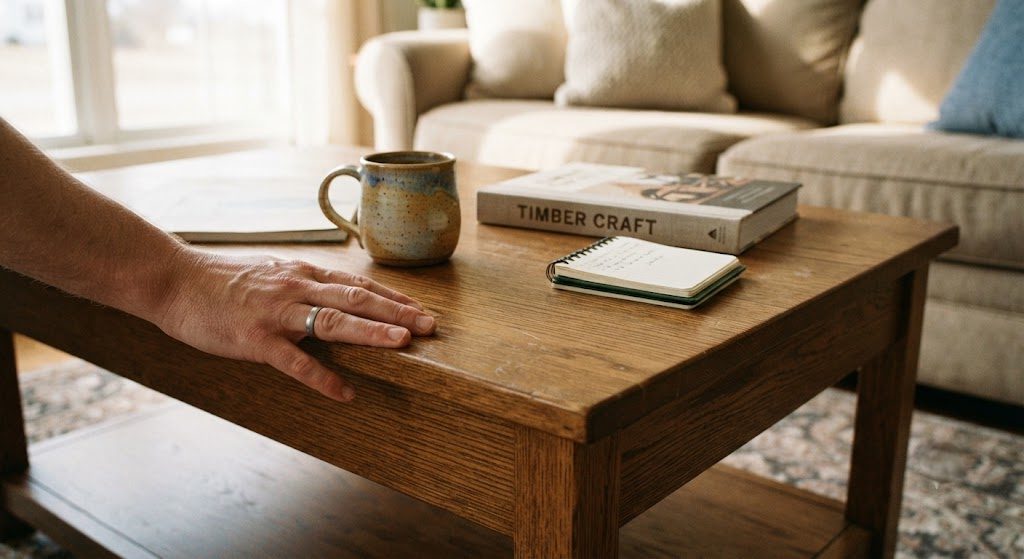
A solid acacia coffee table, 42 by 24 inches, with tapered legs and a lower shelf. No veneer, no MDF, no assembly required beyond screwing in the legs. The finish is a warm medium brown that hides scratches well—a practical consideration if this table will see pizza boxes, board games, and the occasional barefoot afternoon. The lower shelf adds storage without adding visual bulk. This table cost $350 and would look right at home next to a $2,000 sofa. I've tested the same model in person and confirmed the corner blocks are screwed, not just glued.
The Floor Lamp: $180
Lighting at eye level is what makes a room feel furnished. Overhead lights alone make any living room feel like a waiting area. This is a simple arc floor lamp in a brushed brass finish with a linen shade. It curves over the sofa at roughly 58 inches, putting light exactly where someone would read. Brass finishes at this price are usually lacquered steel, not solid brass, and that's fine—the lacquer prevents tarnishing, and the visual weight is the same. This lamp is from a mid-tier retailer that runs sales regularly; $180 is the non-sale price, and waiting for a 20-percent-off weekend drops it to $144, which is even better. I'm listing it at full price because sales aren't guaranteed.
The Side Table: $60
This is the vintage flex. A small solid wood side table—round, roughly 18 inches in diameter, with turned legs and a lower shelf—found at a thrift store and cleaned up. No refinishing required, just a damp cloth and a felt pad on the bottom to protect the floor. Vintage side tables are the easiest furniture category to buy secondhand because they're small, they're abundant, and the joinery on old pieces is often better than new ones at five times the price. If you can't find vintage, a new round side table in solid wood or metal will run $80 to $120 from a big-box retailer. This budget allocates $60 for the vintage find and puts the savings toward the rug.
The Accent Chair: $280
A single accent chair in a textured woven fabric, with a solid wood frame and a seat depth of 21 inches. It's not a recliner, not a statement piece—just a well-built chair that faces the sofa and completes the conversation zone. The fabric is a warm rust color that adds contrast against the neutral sofa and rug. This chair came from the same direct-to-consumer brand as the sofa, and the frame uses the same joinery standards. At $280, it's the piece I'd cut if the budget were tighter, but it earns its place by making the room seat five instead of three.
The Throw Pillows and Throw Blanket: $90
Two 22-inch pillow inserts in a feather-down blend, plus two cotton-linen blend covers in muted colors that pick up the rust from the accent chair and the charcoal from the sofa. A cotton throw blanket in cream, large enough to actually use. These are functional textiles, not decorative shams. The pillows support a lower back or an elbow. The blanket gets used during movies. $90 total from a home goods retailer that sells separates, not sets.
Piece | Source | Price |
|---|---|---|
Sofa | Direct-to-consumer | $1,400 |
Rug | Direct-to-consumer, wool blend | $380 |
Coffee Table | Mid-tier retailer, solid acacia | $350 |
Floor Lamp | Mid-tier retailer, brushed brass | $180 |
Side Table | Vintage | $60 |
Accent Chair | Direct-to-consumer | $280 |
Pillows & Throw | Home goods retailer | $90 |
Total | $2,740 |
What This Room Gets Right
Every dollar went to structure first, aesthetics second. The sofa and rug account for nearly two-thirds of the budget. The coffee table and lighting are mid-tier pieces bought at honest prices. The side table is vintage, proving not every piece needs to be new. Nothing in this room is a placeholder. Nothing will need replacing in two years. And everything was chosen by someone who has spent a career knowing the difference between furniture that photographs well and furniture that lives well. This room lives well.
Keep Reading

How to Find Furniture Discount Stores Near Me Without Buying Junk
Find furniture discount stores near me without sacrificing quality. Learn how to...

Luxury Furniture That Earns Its Price: A Buyer’s Guide
Luxury furniture advice from a former senior buyer: learn how to judge frames, j...

How to Choose a Dining Set for 6 That Actually Works
Find a dining set for 6 that fits your room, budget, and daily life. Learn which...
Owner Letters
0 lettersNo letters yet — be the first to write one.