
Which Pieces Are Worth Spending On First — and Which Can Wait
Furnishing a home is rarely a single event. It's a process that unfolds over years, paycheck by paycheck, room by room. The question isn't just what to buy—it's what to buy first, and where to allocate the budget you have right now. I've watched friends, clients, and complete strangers make the same mistakes: blowing the budget on the wrong piece, cheaping out on the wrong piece, and ending up with a room that feels both expensive and disappointing. Here's the hierarchy I'd use if I were starting from scratch.
The Priority Rule
The rule is simple: spend first on the pieces that take the most physical stress, are the hardest to replace, and define how the room is used. Delay spending on pieces that are easy to swap, purely decorative, or available inexpensively on the secondary market. A sofa is structural. A side table is an accessory. Treat them accordingly.
Living Room: Sofa First, Everything Else Follows
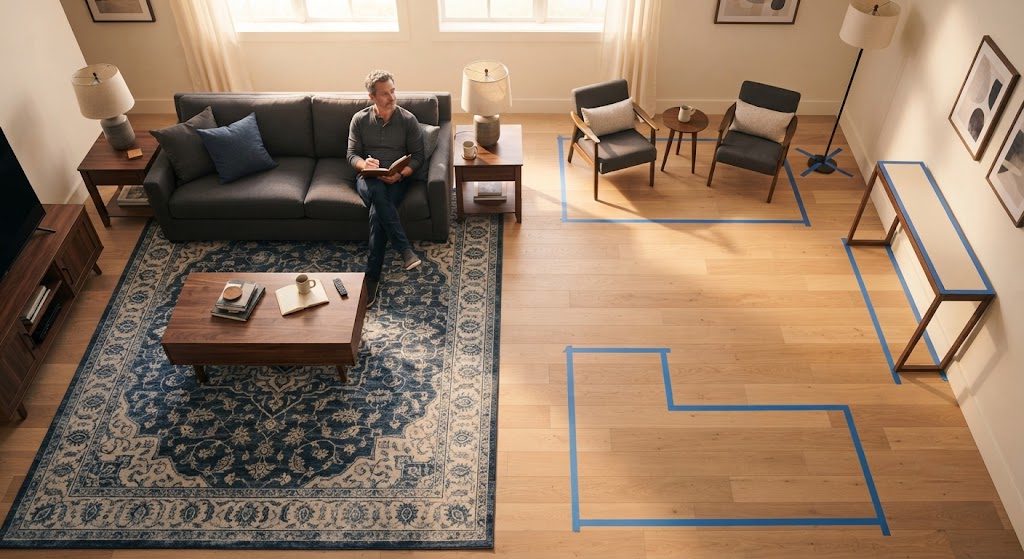
The sofa is the most important piece of furniture in most homes. It takes more hours of use per day than any other piece except a mattress. It's large, heavy, expensive to move, and expensive to replace. It anchors the room visually and functionally. If you have $3,000 to furnish a living room, put $1,800 into the sofa and figure out the rest from there. I've said it before in my sectional test, and I'll say it again: a $2,400 sofa with $600 of side tables looks better and lives better than a $600 sofa surrounded by $2,400 of accessories.
After the sofa, the next priority is the rug. A good rug defines the seating zone, absorbs sound, and gets walked on every day. Wool rugs with a dense weave last decades. Synthetic rugs in high-traffic areas show wear within two years. Spend $400 to $800 on an 8-by-10 wool rug and you won't think about it again for a decade.
Coffee tables, side tables, and floor lamps come third. These are the pieces where vintage and secondhand shine. A solid wood coffee table from a thrift store or estate sale, refinished or simply cleaned, will outlast a new $300 veneer table and look better doing it. The same goes for lamps—old brass or ceramic bases with new shades cost a fraction of new designer lighting and bring character that mass-produced pieces can't match.
Accent chairs, throw pillows, and decorative objects come last. These are the frosting, not the cake. Buy them when the room is already functional, and let them evolve over time. The room should work without them.
Dining Room: The Table Is the Foundation
A dining table takes daily abuse: hot plates, cold glasses, elbows, spills, and the occasional attempt to open a bottle without a coaster. Spend on the table first. Solid wood, properly joined, with a finish that can be repaired. The chairs can come later, and they don't need to match. In fact, mixed chairs around a solid table is one of the most reliable design moves I know—it looks intentional, it's budget-friendly, and it lets you buy chairs one or two at a time as you find them.
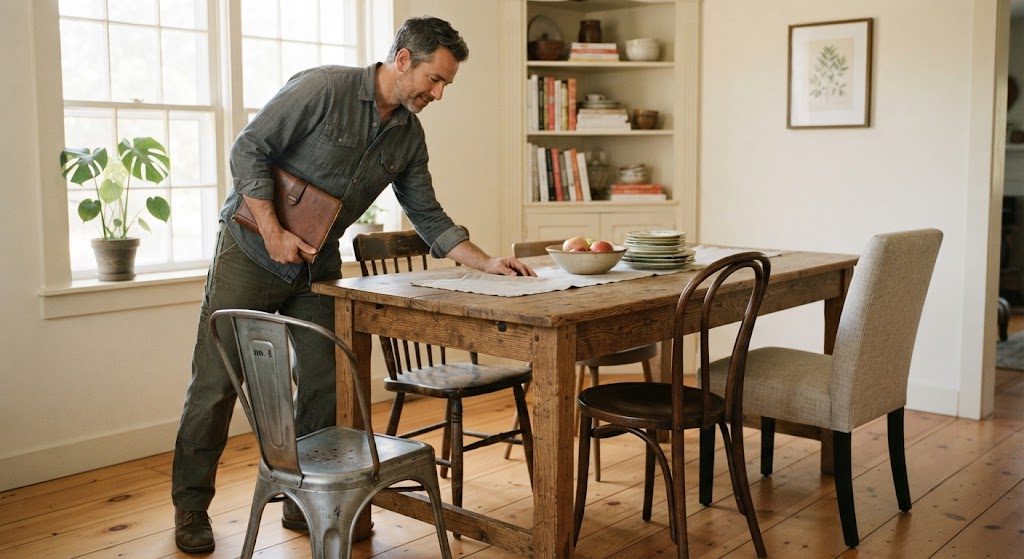
If you can only afford one thing right now, buy the table. Eat at it with folding chairs for six months. Then add chairs one by one—start with the two you'll use daily, then add more as you find the right pieces. A credenza or sideboard can wait. It's storage, not seating. It doesn't earn its place until the table and chairs are settled.
Bedroom: The Mattress and the Frame Are Two Different Budgets
The mattress is a health expense. Spend what it takes to get the support you need—this isn't a furniture decision, it's a sleep decision, and the budget rules are different. I won't cover mattresses here except to say: buy the right one, regardless of price.
The bed frame is a separate purchase and can wait. A quality mattress on a simple metal frame with a decent headboard is a perfectly functional setup for years. The bed frame you'll keep for decades—the solid acacia or walnut piece with proper joinery—can wait until you've saved for the right one. The same hierarchy applies to the rest of the bedroom: a good dresser with solid drawers matters more than matching nightstands, which can be vintage finds or even small tables repurposed.
The Regret Patterns I've Watched Repeat
After fifteen years in this industry, I've seen the same regrets surface again and again. Nobody regrets spending on a good sofa. Nobody regrets buying a solid wood dining table. But I've met dozens of people who regret buying a cheap sofa that sagged in two years, a cheap bed frame that squeaked from day one, and a matched set of case goods they bought all at once and never loved. The common thread: they spent evenly across everything instead of concentrating budget on the pieces that earn it.
Priority | Living Room | Dining Room | Bedroom |
|---|---|---|---|
Spend Now | Sofa, rug | Table | Mattress |
Spend Next | Coffee table, lighting | Chairs (start with 2) | Dresser |
Can Wait | Accent chairs, decor | Credenza, extra chairs | Nightstands, bed frame |
Go Vintage | Side tables, lamps | Chairs, artwork | Nightstands, mirror |
Buy less at first. Buy better where it counts. Let the rest fill in over time. The room will look better, last longer, and feel more like you than anything you could buy all at once on a rushed Saturday afternoon.
Keep Reading

How to Find Furniture Discount Stores Near Me Without Buying Junk
Find furniture discount stores near me without sacrificing quality. Learn how to...

Luxury Furniture That Earns Its Price: A Buyer’s Guide
Luxury furniture advice from a former senior buyer: learn how to judge frames, j...

How to Choose a Dining Set for 6 That Actually Works
Find a dining set for 6 that fits your room, budget, and daily life. Learn which...
Owner Letters
0 lettersNo letters yet — be the first to write one.