
The Most Common Furniture Mistake I See — and It's Never About Style
I've walked into beautifully decorated living rooms that felt wrong the moment I stepped in. Not because of the color palette or the fabric choices—those were fine. It was the furniture. A sofa pushed against every wall. A coffee table you had to climb over to reach the couch. A dining table so wide the chairs couldn't pull out without hitting the wall. In fifteen years of evaluating how people actually live with their furniture, I've learned that the most common mistake is never about style. It's about giving furniture enough room to breathe.
The Breathing-Room Rule
Every piece of furniture needs space around it—not just for walking, but for the piece itself to function. A chair needs room behind it to be pulled out. A sofa needs clearance in front for legs and traffic. A coffee table needs to sit within reach, not a lunge away. When these clearances get squeezed, the room stops working, no matter how good the individual pieces are.
The Three Numbers That Matter Most
There are three clearances I've used on every floor plan for hotels, design projects, and my own home. They're not opinions—they're the measurements that keep a room functional.
The first is 36 inches. That's the minimum width for a primary walkway through a room. If the path between a sofa and a wall is narrower than 36 inches, people will turn sideways to pass, and the room will feel cramped regardless of the square footage. In open-plan spaces, this is the number that separates a living zone from a hallway.
The second is 18 inches. That's the ideal distance between the front edge of a sofa and the edge of the coffee table. Closer than 16 inches and you can't walk between them. Farther than 20 inches and nobody can reach their drink without leaning forward off the cushion. This distance gets ignored constantly—I see coffee tables pushed against sofas, or floating six feet away in large rooms, equally useless.
The third is 30 inches. That's the clearance you need behind a dining chair when it's pulled out from the table. Measure from the table edge to the wall or the nearest piece of furniture. If it's less than 30 inches, someone will get trapped at the table while another person tries to squeeze past. For chairs against a wall, allow 36 inches if that wall also contains a walkway.
The Tape Test Anyone Can Do
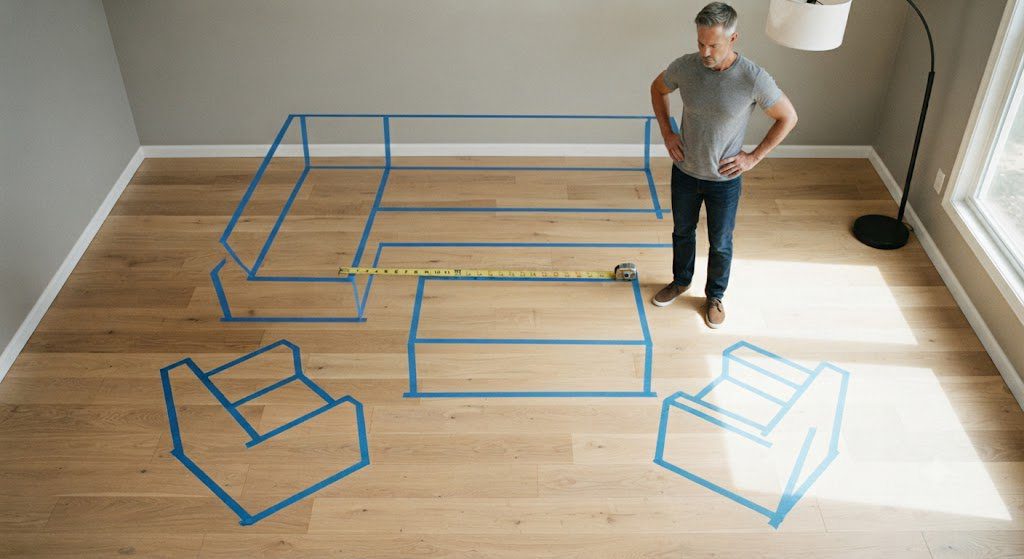
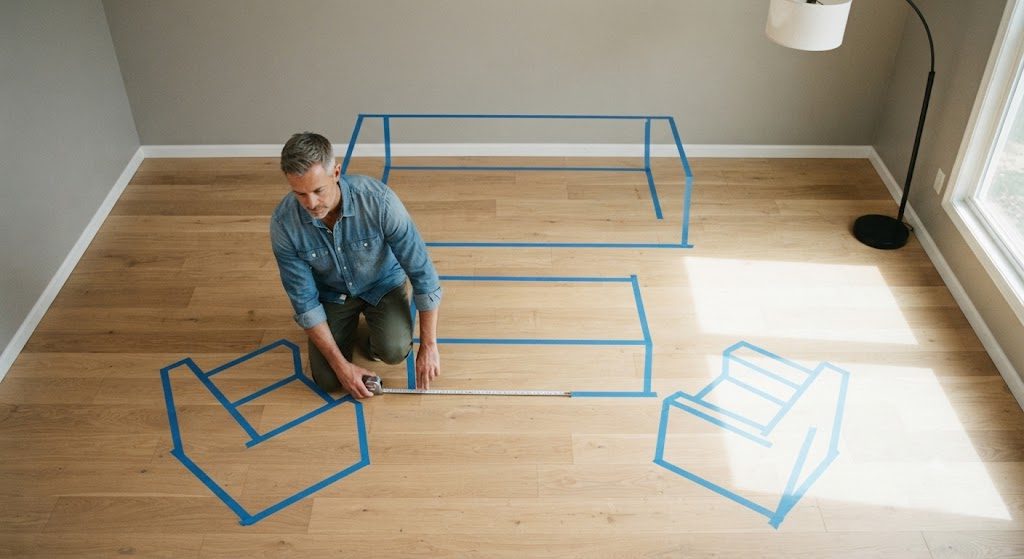
Before you buy anything, map the room with blue painter's tape on the floor. Mark out the footprint of every piece you're considering—real dimensions, not estimates. Include the clearance zones: 18 inches in front of seating, 36 inches for walkways, 30 inches behind dining chairs. Walk through the taped layout. Open imaginary drawers. Pull out imaginary chairs. Pass someone in the walkway. If you have to step over tape to reach the coffee table, the piece is too big. This test takes thirty minutes and costs four dollars in tape. It has saved my clients more money than any other single piece of advice I've ever given.
Why This Mistake Keeps Happening
Showroom floors are vast, with high ceilings and generous spacing that make a nine-foot sofa look proportionate. Bring that same sofa into a twelve-by-fourteen-foot living room and it eats the space. Online listings are worse—a sofa photographed in a studio gives zero context for scale. The only number that matters is the one on your tape measure, laid out on your own floor. I've seen $8,000 sofas returned because nobody checked whether the doorway could accommodate the delivery, let alone the room. Measure the doorways. Measure the elevator. Measure the stairwell. Then lay the tape.
Scale isn't about restraint. It's about respect—for how you move through a room, how you sit with people, how you live. Get the breathing room right, and the furniture you already own will suddenly look like it belongs.
Keep Reading

Minimalist furniture: How to Buy Pieces That Look Good and Last
Minimalist furniture for real homes: learn how to judge materials, joinery, comf...

How to Choose a Wood Desk That Holds Up to Real Life
Find a wood desk that earns its space with solid construction, useful storage, a...

Armchair Armchair: How to Choose a Comfortable, Well-Made Chair
Armchair armchair buying advice from a former furniture buyer: learn how to judg...
Owner Letters
0 lettersNo letters yet — be the first to write one.