
Modular Couch: The Smart Way to Buy a Sectional You Won't Regret
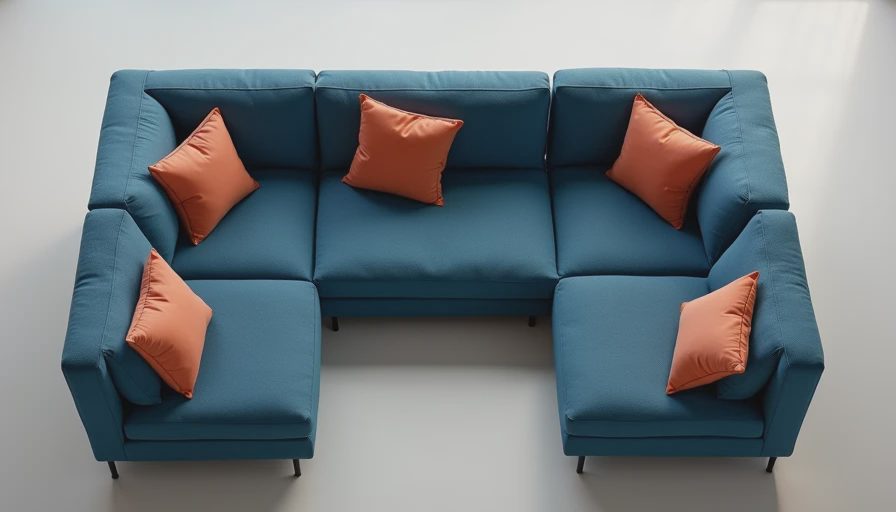
A modular couch is one of the few furniture purchases that actually adapts to the way you live. I say that as someone who spent 15 years buying sofas for Crate & Barrel and Restoration Hardware, and who has watched shoppers fall for a pretty sectional that won't fit through their door. Let's talk about what makes a modular system worth your money, what to check before you click buy, and where you can save without ending up with a sagging mess.
What Exactly Is a Modular Couch?
A modular couch is a seating system built from separate pieces, like an armless seat, a chaise, a corner wedge, and an ottoman, that lock together and can be rearranged. Unlike a traditional one-piece sectional, a modular couch lets you change the layout without buying a new sofa. Move to a bigger apartment? Add a piece or two. Need a guest bed? Reconfigure the sections into a wide sleeping surface. That flexibility is why people make the switch.
But that flexibility comes with trade-offs. The connectors and feet have to work perfectly to keep the couch stable. A cheap modular couch can wobble, and the seams between sections can create a ridge you'll feel at the seam. That's why the construction details matter more here than on a fixed-frame sofa.
The Real Benefits of Going Modular
The biggest advantage is moving-day sanity. You can carry a modular couch up narrow staircases and through tight doorways one box at a time. Companies like Burrow and Floyd built entire brands around this idea, shipping sections in manageable boxes that assemble in under an hour with no tools. That's a huge deal for apartment dwellers and anyone who's watched a sectional get craned through a third-story window.
The other benefit is longevity. When a one-piece sofa wears out, you can't replace just the part that broke. A modular couch lets you swap out a single seat cushion or armrest if it gets damaged, which means the rest of the frame isn't wasted. I've seen families buy a three-seat modular set and later add a chaise and a second ottoman to the same system. That evolution is the smart way to furnish a living room you'll live in.
What to Check Before You Commit
Before you buy one, open the spec sheet and look at four things: frame material, joinery, foam density, and fabric rub count.
First, the frame. Look for kiln-dried hardwood like poplar, rubberwood, or beech. Avoid particleboard or MDF; they won't hold up to years of reassembly. The best modular couches use brackets or bolts at the connection points, not the little plastic clips you find on budget models. Metal brackets with locking tabs are a good sign.
Second, cushion foam. A density of 1.8 pounds per cubic foot is the minimum for everyday use. Go for 2.0 or higher if you'll use the couch daily. Some brands use a foam core wrapped in down or memory foam to get a plush feel without losing support. Sit on it for at least ten minutes in the store; if you feel the frame under your thigh, it's too soft.
Third, the fabric. Look for a rub count of 30,000 or higher if you have kids or pets. Crypton or performance fabrics are worth the upcharge because they resist spills and pet hair. And check that cushion covers are removable and washable. That alone can double the life of the couch.

How Much Should You Pay for a Modular Couch?
You can find decent two-seat modular couches for $1,000 to $1,500 from direct-to-consumer brands like Burrow and Article. West Elm sits in the mid $2,000 to $3,500 range for a full modular system, and Pottery Barn's custom lines fall nearby. At the premium end, I've priced modular sectionals from brands like Restoration Hardware that hit $5,000 or more, but you're paying for leather, deeper modular programs, and name-level design.
Here's the honest advice from someone who has written purchase orders for both ends: for most homes, the sweet spot is the $2,000 to $3,000 range. That's where you get a kiln-dried frame, metal connectors, good cushion foam, and a fabric that won't pill in six months. Below $1,500 is a gamble; you can find gems, but they're rare. Above $4,000, you're paying for aesthetics and brand, not necessarily a better sitting experience.
Where the Money Actually Goes
Let's break down the price of a $2,500 modular couch. The frame is maybe 30% of the cost, covering the lumber, brackets, and connectors. The cushion fills and upholstery are another 25%. Labor is about 20% if it's made in the US, less if it's imported. Shipping and packaging runs 15%, and the remaining 10% covers brand overhead, warranty, and profit.
That's why the cheap couch fails. A $900 version can't afford a hardwood frame and metal connectors, so corners get cut. You end up with that wobbly feeling I mentioned, and you'll feel it the first time a guest sits on the armrest. I'd rather buy a used premium modular system on Facebook Marketplace than a brand-new budget one. A quality frame lasts decades; the upholstery can always be re-covered.
The Bottom Line on Buying a Modular Couch
A modular couch is a practical choice for small spaces, renters, and anyone who likes to change rooms around. Look for a hardwood frame, metal connectors, high-density foam, and performance fabric. Plan to spend at least $1,500, and stretch to $2,500 if you can. If you treat the couch like an investment and buy from a brand that sells replacement cushions and spare connectors, you'll be sitting on that same frame in fifteen years.
I've watched too many people buy a "temporary" couch and end up hating it. Do the homework once, and the couch you choose today can grow with your family, your next apartment, and your ever-changing living room.
Keep Reading
How to Choose the Best Mattress for Heavy People
Find the best mattress for heavy people with practical guidance on support, dura...

How to Choose the Best Standing Desk for Your Home Office
Find the best standing desk for your room, budget, and work habits. Compare stab...
How to Choose the Best Mattress for Side Sleepers
Find the best mattress for side sleepers with practical picks, material advice, ...
Owner Letters
0 lettersNo letters yet — be the first to write one.