
Fabric Rub Count, Foam Density, and Frame Joinery: A Buyer's Translation Guide
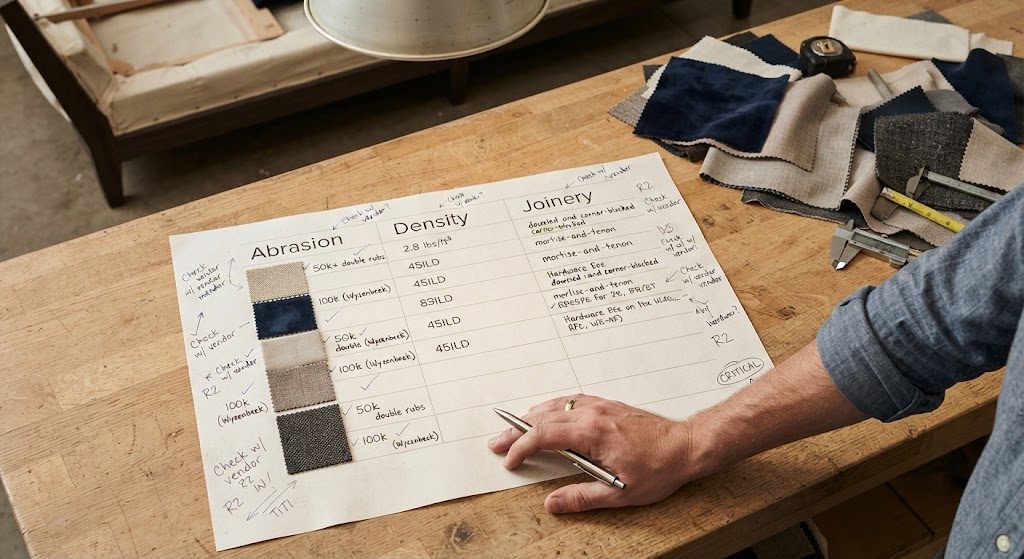
Every sofa has a spec sheet. It's not the hangtag with the price and the fabric name. It's the internal document—the one the buyer reads before writing a purchase order—that lists the materials, construction methods, and performance ratings of every component. Most retailers won't volunteer it. Most salespeople don't know where to find it. But if you know the three numbers that matter, you can ask the right questions and get answers that tell you more than any showroom sit test ever will.
The Three Numbers
These aren't the only numbers on a spec sheet, but they're the ones that predict longevity. Color, leg shape, and cushion fill are preferences. Rub count, foam density, and joinery type are facts. Learn these three, and you can evaluate any upholstered piece in the store.
Fabric Rub Count: How Long Before the Surface Wears Through
The rub count—technically the "double-rub" count, measured by a Wyzenbeek or Martindale machine—tells you how many cycles of abrasion a fabric can withstand before showing visible wear. A mechanical arm rubs a piece of cotton duck or wire mesh back and forth across the fabric until the threads break or the surface changes. That number is your durability rating.
For residential use, the thresholds are straightforward. Under 15,000 double-rubs is decorative only—pillows, curtains, the back of an accent chair nobody sits in. Between 15,000 and 25,000 is light residential: a formal living room used a few times a week. Between 25,000 and 40,000 is general residential, suitable for a family room with daily use. Above 40,000 is heavy-duty, and above 100,000 is commercial grade—what hotels and restaurants specify. I've seen performance fabrics at High Point hitting 120,000 double-rubs with the hand feel of cotton velvet. That fabric will outlast the frame it's stapled to.
One caveat: rub count measures surface abrasion, not seam strength, not pilling, not fade resistance. A fabric with a 50,000 double-rub rating can still pill if the yarns are loosely twisted. Ask for the rub count, but also run your fingernail across the fabric in the store. If fibers pull up, it'll pill at home.
Foam Density: The Number That Predicts Seat Sag
Foam density is measured in pounds per cubic foot (PCF)—the weight of a 12-by-12-by-12-inch block of foam. Higher density means more material per cubic foot, which means the foam resists compression longer before losing resilience. This is the single best predictor of whether a sofa cushion will still support you in year five or whether you'll feel the frame through the foam.
For seat cushions used daily, the minimum is 1.8 PCF. Below that—and most sofas under $900 use 1.5 PCF foam—the cushion will soften significantly within two to three years. It'll still look fine in photos, but sitting on it will feel like sitting on a folded blanket over a board. The sweet spot for residential use is 2.0 to 2.5 PCF high-resilience foam. Above 2.5 PCF is commercial-grade and feels firmer than most people prefer in a home. If you want a soft sit that lasts, ask for 2.0 PCF foam wrapped in a dacron or feather envelope. The wrap provides the initial softness; the core provides the longevity.
A spec sheet should list foam density by component: seat cushion core, seat cushion wrap, back cushion, and arm padding. If only one number appears, it's usually the seat core, but ask for clarification. If the sheet doesn't list foam density at all, assume 1.5 PCF and price your expectations accordingly.
Frame Joinery: What Holds the Skeleton Together
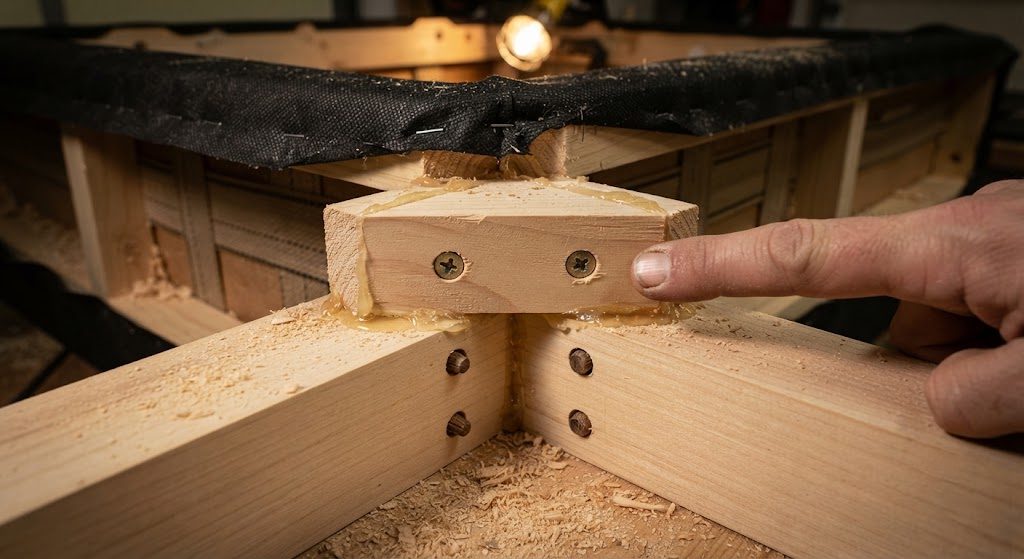
Frame joinery is the most hidden and most critical element of sofa construction. The frame takes every pound of weight, every lateral shift, every collapse onto the cushions after a long day. When joinery fails, the frame creaks, then cracks, then collapses.
The hierarchy is clear. Best: kiln-dried hardwood frame with double-doweled joints, corner blocks that are both glued and screwed, and cross-bracing between the side rails. This construction lasts decades and can be repaired. Good: kiln-dried hardwood or high-quality plywood frame with doweled joints and glued corner blocks. This will last ten to fifteen years of daily use. Acceptable: plywood frame with stapled corner blocks and no dowels. This will last five to seven years before developing creaks. Unacceptable: pine or particleboard frame with staples only, no corner blocks, no dowels. This will fail within three years, and it's what lives inside most sofas under $800.
Ask the salesperson two questions: "What wood is the frame made of?" and "How are the corner blocks attached?" If they answer "hardwood" and "glued and screwed," you're looking at a well-built frame. If they can't answer either question, the frame is hiding something.
How to Ask for the Spec Sheet
Most floor salespeople don't carry spec sheets. They carry pricing sheets and fabric swatches. The spec sheet lives in the buying office or on the manufacturer's dealer portal. Ask: "Can you send me the spec sheet for this frame? I'm looking for the foam density, the rub count on this fabric, and the frame wood species." If the salesperson says they'll email it to you, they're serious. If they look confused, ask for a manager. If the manager can't produce the numbers, the manufacturer isn't supplying them—and that, by itself, tells you what you need to know. Good manufacturers publish their specs. The ones that don't are selling style over structure.
Keep Reading
"Solid Wood" Doesn't Mean What You Think It Means
Solid wood. Engineered wood. Veneer. MDF. These terms get thrown around like the...
The Five-Second Drawer Test That Tells You Everything About a Dresser
I've opened thousands of drawers as a furniture buyer, and five seconds is all I...
Leather Grades Are Half Marketing. Here's What the Buyer's Spec Sheet Actually Cares About.
Full grain, top grain, bonded, corrected—the leather grades you see on retail ta...
Owner Letters
0 lettersNo letters yet — be the first to write one.