
Leather Grades Are Half Marketing. Here's What the Buyer's Spec Sheet Actually Cares About.
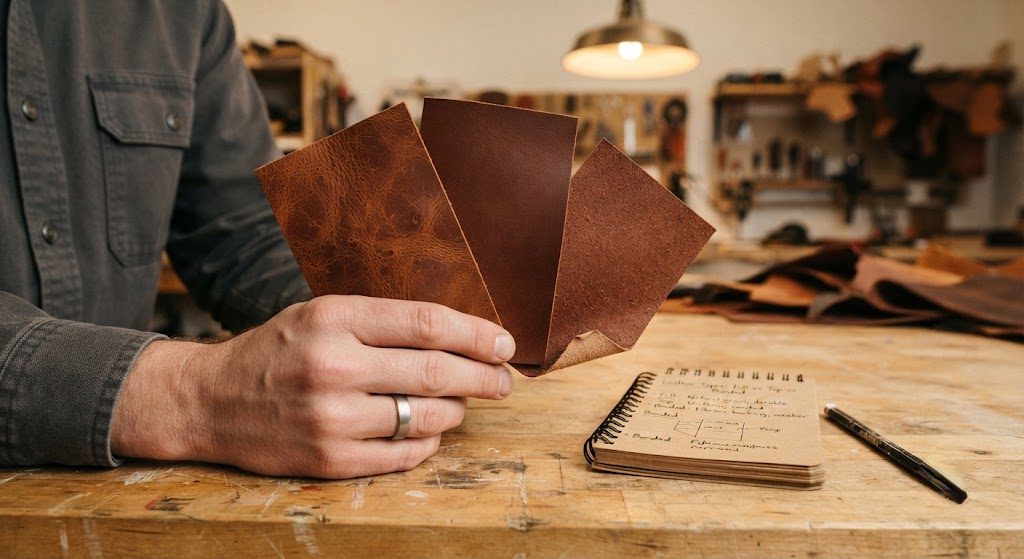
The leather conversation in furniture stores is backwards. Salespeople talk about grades—full grain, top grain, genuine, bonded—as if they're a simple ranking from best to worst. They're not. They're categories that describe how much of the original hide remains and how much it's been altered. But knowing the grade doesn't tell you whether the leather will crack in three years, whether it'll stain when your dog jumps on it, or whether it'll develop a patina you love or a wear pattern you hate. For that, you need the spec sheet.
What the Grades Actually Mean
The standard leather grades describe processing, not quality. A well-processed top-grain leather can outperform a poorly tanned full-grain. A bonded leather with a thick protective coating can survive a kids' playroom longer than an unprotected aniline full-grain. Context matters more than category.
Full Grain: The Whole Hide, No Sanding
Full-grain leather uses the entire hide thickness, with the natural surface intact. The grain—the pattern of pores, hair follicles, and natural markings—remains visible. Nothing has been sanded off. This leather breathes, develops a patina over years of use, and tells the story of the animal it came from. It's also the most expensive and the most vulnerable to stains, scratches, and UV fading because it has no protective topcoat.
Full-grain aniline leather, dyed in a transparent bath with no pigment coating, is the most natural and the most delicate. A glass of red wine will leave a permanent mark. A dog's claws will scratch the surface. For a formal living room without kids or pets, full-grain aniline is beautiful. For a family room where someone will definitely eat nachos on the sofa, it's a liability wearing a high price tag.
Top Grain: Sanded, Corrected, More Uniform
Top-grain leather is full-grain leather that has had its top surface sanded off—usually to remove scars, insect bites, or branding marks from the hide. A new grain pattern is embossed onto the surface, and a protective finish is applied. The result is more uniform in color and texture, more stain-resistant, and less expensive than full grain. It also doesn't develop a patina the same way, and it won't breathe as well because the finish seals the pores.
For most homes, top-grain leather is the practical choice. It cleans easily, resists spills, and stands up to daily use. The best top-grain leathers use a semi-aniline finish—a light pigment coat that still lets some natural grain show through—and will age gracefully while protecting against the worst of daily life. This is the leather I've specified for hotel lobby seating and family room sofas alike.
Genuine Leather: A Legal Term, Not a Quality Claim
"Genuine leather" sounds reassuring. It's not. The term is a legal classification that means the product contains some leather—typically the lower layers of the hide that have been split off from the top grain, bonded together, and embossed with a fake grain pattern. Genuine leather is to full-grain what particleboard is to solid wood: technically derived from the same source, functionally a completely different material. It's stiff, doesn't breathe, and can crack or peel within a few years. The tag says "genuine leather" because "reconstituted leather fiber product" doesn't sell sofas.
Bonded Leather: Not Leather
Bonded leather is leather dust and polyurethane mixed together, spread onto a fabric backing, and embossed with a grain pattern. It's to leather what vinyl flooring is to hardwood. It peels, it cracks, and when it fails—which it will, usually within two to three years of daily use—there's no repairing it. Bonded leather is the material behind most "leather" office chairs under $300 and "leather" sofas under $800. If the price seems too good to be true, check the tag for the word "bonded." That's the explanation.
What the Spec Sheet Actually Cares About
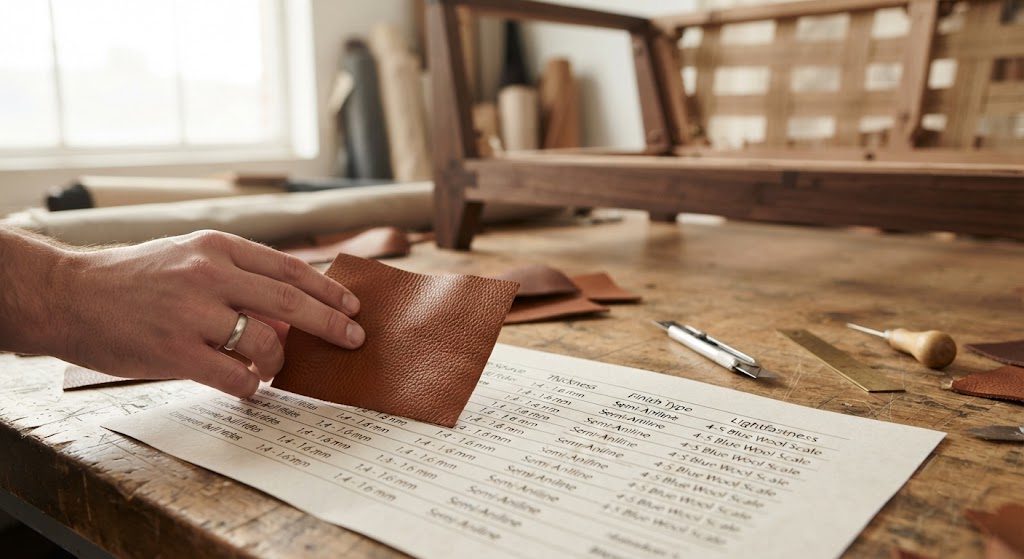
When I evaluated leather for purchase orders, the grade was the starting point, not the conclusion. Four other specifications mattered more for predicting how the leather would perform.
Hide source matters because different animals produce different leather characteristics. European bull hides are thicker and tighter-grained, ideal for seating that needs to hold shape. South American hides are softer and more pliable, better for upholstery that drapes. Italian tanneries still lead on full-grain aniline processing; Chinese tanneries dominate corrected top-grain at lower price points. The country of tanning tells you as much about quality as the grade does.
Thickness, measured in millimeters, determines durability. Upholstery leather should be 1.0 to 1.4 millimeters thick. Below 0.8 millimeters, the leather will stretch and tear under tension. Above 1.6 millimeters, it's too stiff for comfortable seating and better suited for belts or saddles. Ask for the thickness spec. If the manufacturer won't provide it, the leather is likely split—the thin, weak lower layer sold off after the top grain was removed.
Finish type is the difference between leather that lives with you and leather that fights you. Aniline finishes are unprotected and beautiful. Semi-aniline finishes add a light protective coat while keeping the natural grain visible. Pigmented finishes apply an opaque color coat with a clear topcoat—maximum protection, minimum natural character. Protected or pigmented finishes are what you want for a sofa that will face sunlight, pets, or children. They won't develop a romantic patina, but they'll survive a decade of real life without a stain that tells the story of every spilled coffee.
Lightfastness is the fade rating. Leather in direct sunlight will fade, crack, and discolor within a few years unless treated with UV inhibitors. High-quality upholstery leather includes a lightfastness rating; if the spec sheet doesn't mention it, assume the leather will fade in a sunny room.
The One Question That Cuts Through Everything
Ask: "What's the leather thickness in millimeters, and is it aniline, semi-aniline, or pigmented?" If the salesperson answers confidently, you're talking to someone who knows the product. If they pivot back to "it's full-grain" or "it's top-grain," they're reciting the tag. The tag tells you the category. The spec sheet tells you the performance. One is marketing. The other is truth.
Keep Reading
"Solid Wood" Doesn't Mean What You Think It Means
Solid wood. Engineered wood. Veneer. MDF. These terms get thrown around like the...
The Five-Second Drawer Test That Tells You Everything About a Dresser
I've opened thousands of drawers as a furniture buyer, and five seconds is all I...
Fabric Rub Count, Foam Density, and Frame Joinery: A Buyer's Translation Guide
Three numbers determine how long a sofa lasts, and most shoppers never see them....
Owner Letters
0 lettersNo letters yet — be the first to write one.